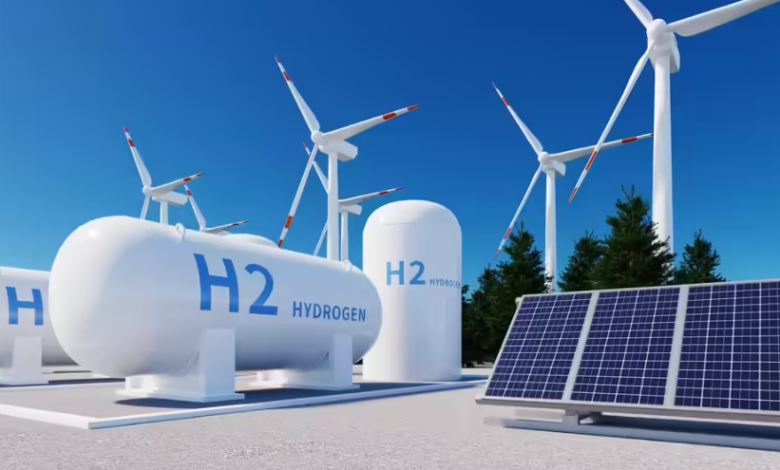
The promise of the “Hydrogen Economy” is seductive. It offers a vision of a world powered by the most abundant element in the universe, where the only exhaust emission from our cars and power plants is pure, drinkable water. Governments and energy giants are pouring billions into electrolyzers and green energy storage, treating hydrogen as the silver bullet for decarbonization.
However, there is a massive, largely unspoken logistical hurdle standing between us and this green future. It isn’t just about how we generate hydrogen; it is about how we move it.
The current arteries of our global energy system—the millions of miles of natural gas pipelines currently buried beneath our feet—are fundamentally incompatible with this new fuel source. If we attempt to pump pure hydrogen through our existing infrastructure, we risk catastrophic failure. The reason lies in a molecular phenomenon that sounds like science fiction but is a very real engineering nightmare: hydrogen embrittlement.
The Houdini Molecule
To understand the problem, we have to look at the atomic scale. Natural gas (methane) is a relatively large molecule. It flows through standard carbon steel pipelines easily. Hydrogen, however, is the smallest molecule in existence. It is an escape artist.
Because of its minuscule size, hydrogen does not just flow through a pipe; it tries to flow into the material of the pipe itself. Under high pressure, hydrogen atoms can diffuse into the solid metal lattice of standard carbon steel. Once inside, they accumulate in the microscopic voids and imperfections of the metal.
As these atoms gather, they recombine into gas molecules, building up immense internal pressure—sometimes exceeding the yield strength of the steel itself. This transforms a ductile, flexible metal into something brittle and glass-like. The result? Unexpected cracking, blistering, and sudden, catastrophic ruptures.
The Infrastructure Gap
This chemical reality presents a massive economic challenge. We cannot simply flip a switch and send hydrogen down the same lines that currently heat our homes.
Engineers and metallurgists are currently racing to solve the “transport gap.” While plastic lines work for low-pressure local distribution, the high-pressure transmission lines required to move energy across states or continents require a material that is practically immune to this atomic infiltration.
The solution lies in crystallography—specifically, the microstructure of the metal. We require materials with a “face-centered cubic” crystal structure. This tight, densely packed atomic arrangement acts as a fortress, making it incredibly difficult for hydrogen atoms to diffuse through the metal and cause damage.
See also: How Smart Home Services Keep You Connected Anytime, Anywhere
The Silent Backbone of the Transition
This is where the conversation shifts from energy generation to material science. The future of green energy is not just about wind turbines or solar panels; it is about high-grade metallurgy.
To build the “hydrogen highways” of the future—connecting offshore wind farms to inland cities—engineers are turning to metals with high concentrations of nickel and chromium. These elements create a stable, passive oxide layer on the surface of the metal, acting as a shield. But more importantly, they stabilize that face-centered cubic structure that traps hydrogen on the outside, rather than letting it rot the metal from the inside.
In high-stakes environments like hydrogen refueling stations or high-pressure manifolds, there is no margin for error. A leak here is invisible, odorless, and highly flammable. Consequently, the industry is moving toward seamless, high-alloy solutions. While carbon steel crumbles under this microscopic assault, a high-grade stainless steel pipe stands as the resilient artery required for this new energy era, offering the necessary ductility and resistance to keep the gas contained and the public safe.
A Material Revolution
The shift to hydrogen is forcing us to rethink the permanence of our built environment. For the last century, we built infrastructure designed to last 50 years based on the behavior of oil and natural gas. Now, we must build for a fuel that is chemically aggressive and notoriously difficult to contain.
As we witness the rollout of hydrogen buses and industrial heating systems, it is worth remembering that the revolution isn’t just happening in the fuel tank. It is happening in the walls of the infrastructure itself. The successful transition to a zero-carbon future depends less on political will and more on the microscopic resilience of the metals we choose to bury in the ground. Without the right vessel, the fuel is useless.